My Visit to China: A First-Hand Experience of Development, Innovation, and Sustainability
Suhaib Al-Harahsheh
Greater Mafraq Municipality
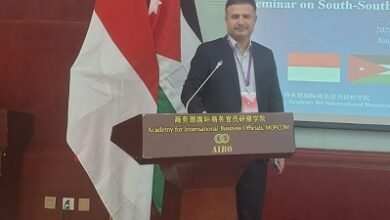
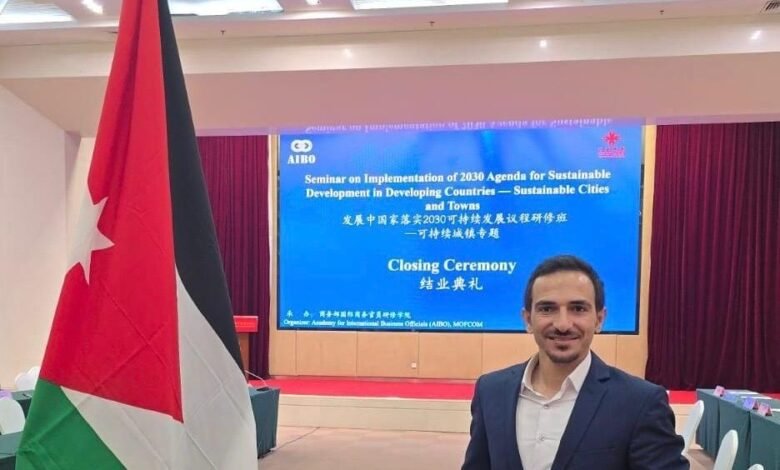
My visit to the People’s Republic of China, specifically to the cities of Beijing and Yinchuan, came at the kind invitation of the Chinese government to participate in a seminar on implementing the 2030 Agenda for Sustainable Development in developing countries: Sustainable Cities and Towns. This seminar was organized by the Academy of International Business Officials, affiliated with the Chinese Ministry of Commerce. This participation was a rich and unique experience, allowing me to closely observe China’s advanced experience in sustainable development and urban planning, and the construction of green and smart cities. I also learned about a comprehensive development model that combines scientific, industrial, economic, and agricultural progress with the preservation of a rich history and cultural heritage, and a confident embrace of the future.
From the beginning of my visit, I was struck by the high level of safety and security in the cities and regions I visited, which provided a great sense of comfort and stability for both residents and visitors. I also observed that the Chinese people possess a deeply rooted culture based on work, productivity, discipline, and commitment, along with warm hospitality and respectful treatment of visitors. It became clear that these values represent one of the fundamental pillars of China’s renaissance, effectively contributing to the development and modernization process and transforming ambitious plans into tangible achievements that serve humanity and society.
China boasts a rich history and a civilization spanning thousands of years. What particularly impressed me was its ability to integrate this rich cultural heritage with modern development. While preserving its historical sites, traditions, and cultural identity, China continues to develop modern cities, improve the quality of life, and create more organized, efficient, and comfortable urban environments.
One of the most striking aspects of my visit was the strong emphasis on urban development and improving the quality of life. Urban development in China is not limited to buildings and infrastructure; it is part of an integrated system encompassing transportation, public services, technology, environmental management, efficient resource utilization, and enhancing cities’ ability to respond to future challenges.
I was also greatly impressed by China’s progress in information technology and data management. Data collection, analysis, and utilization have become crucial components of managing cities, communities, and various sectors. The vast amounts of data and information collected from various regions and fields provide a robust knowledge base that can be leveraged to improve planning and make more accurate and efficient decisions.
More importantly, China has not only focused on data collection and technology development but has also applied these technologies to address real development challenges. One area that particularly caught my attention is the use of technology and data in disaster risk management and emergency response. These tools can help authorities better understand risks, enhance preparedness, respond more quickly, and make more accurate and effective decisions.
I was also interested in the use of modern technology in agriculture and natural resource management, including improving farming methods, increasing water and resource efficiency, and using data to enhance agricultural production. Of particular interest to me is China’s experience in combating desertification, restoring degraded land, and transforming barren land into more productive and sustainable land.
These experiences offer an important lesson in sustainable development. Development is not merely about economic growth or urban expansion; it also encompasses protecting natural resources, reclaiming degraded land, addressing the impacts of climate change, and enhancing communities’ resilience to future risks and challenges.
My visit to Beijing and Yinchuan provided me with a valuable opportunity to learn about China’s development experience and its efforts to build a modern nation based on science, technology, production, innovation, and hard work, while simultaneously preserving its history and cultural heritage.
This visit also demonstrated that investing in people, data, technology, infrastructure, and long-term planning can form a solid foundation for achieving comprehensive and sustainable development.
From my personal perspective, the Chinese experience I witnessed firsthand is worthy of study and emulation. It can offer valuable lessons and insights for many countries, particularly in the areas of urban planning, crisis and risk management, digital transformation, agriculture, combating desertification, land reclamation, and improving quality of life.
In conclusion, my visit to China was more than just a tourist experience; It was an opportunity to learn, observe, and gain firsthand insight into a comprehensive development experience that blends history and civilization, science and technology, production and development, and planning and sustainability.
This experience left a profound and positive impression on me, reinforcing my belief in the importance of exchanging knowledge and expertise between nations and learning from successful development experiences to build a more sustainable and prosperous future.
Finally, I extend my sincere thanks and appreciation to the Embassy of the People’s Republic of China in Jordan, AIBO, and Dr. Hassan Al-Da’aja for providing me with this invaluable opportunity to visit China, learn about its remarkable development experience, and gain firsthand knowledge of its society, cities, technological advancements, and achievements.