
Authors
-

Pakistan and Peacemaking: A Regional Power Asserts Its Presence in International Politics
Prof. Hasan Al-Dajah Professor of Strategic Studies at Al-Hussein Bin Talal University In light of the escalating confrontation between the United States and Iran, and the risks it poses to the security of the Middle East and the stability of the global economy, Pakistan has emerged as one of the most important powers capable of opening channels of communication between the two sides and pushing for de-escalation. This role was not merely a fleeting diplomatic move, but rather represented a qualitative shift in Islamabad’s standing, which transcended its regional boundaries to become an influential player in addressing one of the most complex international crises. From the outset of the escalation, the Pakistani civilian and military leadership realized that the continuation of the confrontation would not achieve a decisive victory for either side, and that the expansion of military operations would threaten the security of the Gulf and South Asia, and affect global navigation, energy, and trade. Therefore, it pursued a quiet and balanced diplomacy based on communication with Washington and Tehran, encouraging them to exercise restraint and bring the disputes back to the negotiating table. Pakistan derives its ability to play this role from its exceptional geographical and strategic location; Pakistan is a neighbor of Iran, an Islamic nuclear power, and maintains important relations with the United States, China, and the Gulf states. It shares a long border with Iran and common security and economic interests, while simultaneously possessing influential channels with American political and military institutions. This balance has granted it a high degree of acceptance from both sides, enabling it to act without being directly aligned with either camp. Islamabad has already become a key player in de-escalation efforts. Along with Qatar, it contributed to the mediation that led to the signing of a US-Iranian memorandum of understanding in June 2016, which provided a window of opportunity for negotiations toward a permanent settlement. Despite the talks faltering and the renewed confrontation, the mere fact that the mediation succeeded in producing a written framework demonstrated Pakistan’s ability to move both sides from the battlefield to the negotiating table, even in the most complex phases. Reuters. Pakistan continued its efforts after the collapse of the truce, emphasizing that renewed conflict serves no one’s interests and that a diplomatic solution remains the most realistic path to safeguarding regional security. This continuity reveals that its role is not based on temporary media investment, but rather on a strategic vision that considers regional stability an integral part of its national security and international responsibility. The Pakistani Foreign Ministry has clearly expressed Islamabad’s readiness to continue its efforts to de-escalate tensions and bring the parties back to the negotiating table. (Al Jazeera English) The involvement of the highest levels of the state, including the political, military, and diplomatic leadership, indicates that mediation has become a comprehensive state policy. High-ranking Pakistani figures have participated in direct contacts and reciprocal visits, and the Pakistani Army Chief of Staff arrived in Tehran in May 2016 to support mediation efforts, coinciding with coordinated diplomatic moves with other regional actors. (Reuters) This role reflects Pakistan’s possession of several influential instruments of power. It is one of the most populous Muslim-majority countries, possesses a powerful military and nuclear capabilities, and occupies a strategic location controlling the crossroads between South Asia, Central Asia, the Middle East, and the Arabian Sea. Furthermore, Pakistan’s economic corridors and ports are crucial components of regional connectivity projects and international trade, particularly within the framework of its strategic partnership with China. However, Pakistan’s power is not based solely on military capabilities, but also on its ability to translate these capabilities into diplomatic influence. An influential state is not simply one that possesses power, but one that can use it to build trust, bridge divides, and prevent crises from escalating. From this perspective, Pakistan presents a model of a state that combines military deterrence with political flexibility and proactive diplomacy. Islamabad’s cooperation with Qatar, China, and other regional states has enhanced the effectiveness of its mediation efforts, without compromising its independence. Beijing has supported Pakistani efforts, while Islamabad has maintained its own relationships with Tehran and Washington. This demonstrates that Pakistan is not seeking to compete with other mediators, but rather to lead a collaborative diplomacy that unites regional and international efforts around the goal of preventing all-out war. This mediation also carries an important message regarding the ongoing transformation of the international system. Addressing major crises is no longer the exclusive domain of traditional Western powers; Asian and Islamic states, foremost among them Pakistan, are now capable of participating in the management of international security. Analyses have suggested that Pakistan’s potential hosting of the talks could elevate its global standing to a level not seen since its role in facilitating the historic US opening to China in the 1970s. Reuters reports that Islamabad’s success in maintaining the trust of the opposing parties is itself a significant political achievement. An effective mediator does not impose ready-made solutions, but rather provides guarantees, channels of communication, and safe spaces for negotiation, preventing miscalculations from escalating into a wider war. Therefore, the value of Pakistan’s role is measured not only by the swift achievement of a final agreement, but also by its ability to keep the door to diplomacy open. Pakistan has become more than just a regional power in the traditional sense; it is a nation that has forcefully asserted itself on the international political stage, demonstrating its capacity to contribute to peacemaking and manage major balances. If it continues on this balanced path, it is poised to become an international diplomatic hub bridging East and West, giving the Muslim world a more prominent and influential voice in shaping the future of global security.
Read More » -

China as I Saw It: A Comprehensive Renaissance and an Inspiring Media Experience
Abdullah Hasan Al-Da’jah Hayat FM Radio My participation in the training course for young media professionals from Arab countries, held from July 21 to August 3, 2026, at the kind invitation of the China Broadcasting and International Economic and Technical Cooperation Co., Ltd., was a rich professional and cultural experience that left me with an excellent and strong impression of China and its comprehensive progress, which places it among the world’s leading and influential nations in shaping the future of the international order. This experience demonstrated that China’s renaissance is not limited to a specific economic or technological sector, but rather is a comprehensive renaissance encompassing industry, trade, education, scientific research, artificial intelligence, media, infrastructure, and public services. What distinguishes the Chinese experience is its ability to combine long-term strategic planning, investment in human capital, scientific innovation, and the preservation of cultural and civilizational identity. Therefore, China has become a global development model, offering developing countries valuable experience in achieving development according to their specific circumstances and national characteristics. [Note: The text abruptly ends here.] China’s rise has also contributed to consolidating multipolarity and restoring balance to international relations by building partnerships based on cooperation, shared interests, and respect for national sovereignty. China has become a major player in the economic, political, technological, media, and international communication sectors, in addition to its role in the Belt and Road Initiative, which serves as a bridge for economic, developmental, and cultural cooperation between peoples. This reflects a vision based on shared development, mutual benefit, and the promotion of peace and stability. The course provided participants with a deeper understanding of China’s national conditions, its political and economic system, its development trajectory, and its future strategies. It also highlighted opportunities for Sino-Arab cooperation, particularly within the framework of the China-Arab Cooperation Forum and the Belt and Road Initiative, and the role of media in conveying stories of friendship, cooperation, and cultural exchange between the two sides. The media and technology sessions had a significant impact on developing my professional knowledge. The course covered new media trends, short video production, social media platform management, converged media, virtual and augmented reality technologies, and live streaming methods. It also provided valuable practical knowledge about using artificial intelligence, big data, and multilingual generation tools, including DeepSeek, in news content creation and enhancing international communication. Field visits to media organizations, production companies, and radio and television stations helped bridge the gap between theoretical knowledge and practical application, offering firsthand insight into news production mechanisms, content creation, and the management of modern media institutions. The course also enhanced my skills in journalistic storytelling, cross-cultural communication, understanding youth phenomena, and delivering more relatable and impactful content to my audience. I gained immensely from this course, which will positively impact my media career. It provided me with new tools, broadened my international perspective, and deepened my ability to utilize technology in media work. Therefore, I extend my sincere thanks and appreciation to the Chinese organizers for their generous invitation, excellent organization, and enriching program, and for this inspiring experience, which will remain a significant milestone in my professional journey
Read More » -
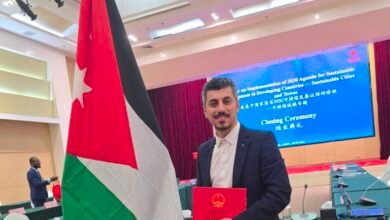
China as I Saw It: A Remarkable Development Experience and a Vision Shaping the Future
shahennews Eng. Laith Zuhair Yousef Al-Mustafa Greater Irbid Municipality My trip to China was an…
Read More » -
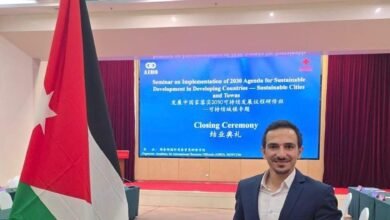
My Visit to China: A First-Hand Experience of Development, Innovation, and Sustainability
Suhaib Al-Harahsheh Greater Mafraq Municipality My visit to the People’s Republic of China, specifically to…
Read More » -
Chinese Language in Jordanian Schools: An Investment in the Future, Not an Alternative to Arabic
Hasan Abdullah Al-Dajah Professor of Strategic Studies at Al-Hussein Bin Talal University Advisor to the Belt and Road Institute at Peking University Member of the World Council for Chinese Studies The announcement of a study to introduce Chinese into Jordanian schools has sparked widespread debate, ranging from support to rejection, and sometimes even resorting to ridicule through comparisons with other languages such as Hindi, Bengali, and Filipino. However, this debate calls for a calm discussion based on an understanding of international developments and Jordan’s strategic interests, far removed from emotional reactions or misconceptions. The first point to emphasize is that the call to teach Chinese does not in any way diminish the status of the Arabic language or compete with it. Arabic is the language of the Holy Quran, national identity, the constitution, and culture, and it will remain the cornerstone of the Jordanian educational system. Learning an additional foreign language does not threaten the mother tongue; rather, it enhances students’ cognitive abilities and broadens their scientific horizons, just as the teaching of English over the past decades has not led to the elimination of Arabic or weakened its official status. The world today is experiencing unprecedented geopolitical, economic, and technological transformations, and China has become one of the most influential powers in the international system. It boasts the world’s second-largest economy, the largest trading nation, and is a major economic partner for over 150 countries. China is leading massive global projects in infrastructure, the digital economy, artificial intelligence, renewable energy, and advanced technology. Chinese universities, research centers, and companies have also become leading producers of knowledge and innovation on an international scale. The Chinese language has transcended its role as a mere means of communication, becoming a language of science, technology, economics, and business. Today, there is a growing global demand for specialists proficient in Chinese in fields such as international trade, engineering, medicine, artificial intelligence, scientific research, diplomacy, tourism, and translation. Consequently, many developed countries have begun integrating Chinese into their educational systems, recognizing its future importance. However, comparing Chinese to other languages like Bengali, Filipino, or Hindi—while respecting and appreciating those cultures—lacks a scientific and strategic basis. The choice of languages in national curricula is not based on the number of residents within a country, but rather on the cultural, scientific, and economic weight of the country that the language represents, and its impact on the global economy and future job opportunities. This is why schools around the world teach English, French, German, Spanish, Japanese, and Chinese—because these languages are associated with major economic and scientific powers, not because they are the most widely spoken among resident communities. Economically, China is currently the largest trading partner for many countries worldwide, and it is also a significant economic partner for Jordan. Bilateral relations are witnessing continuous expansion in the areas of investment, energy, industry, infrastructure, higher education, and technology. Naturally, in the coming years, Jordan will need national talent proficient in Chinese to engage with Chinese companies and institutions, instead of relying on translators and foreign expertise. Furthermore, teaching Chinese opens new horizons for Jordanian students in terms of scholarships, academic exchanges, scientific research, and training at Chinese universities and institutions, which have achieved prominent positions in global rankings, particularly in the fields of engineering, medicine, applied sciences, artificial intelligence, materials science, and communications. Perhaps the most distinctive feature of the Chinese experience is that its renaissance was not achieved solely through natural resources, but also through investment in human capital, education, scientific research, and innovation. Over the past few decades, China has made remarkable strides in advanced technology, space exploration, high-speed rail, quantum computing, 5G and 6G communications, robotics, smart manufacturing, clean energy, and artificial intelligence, becoming a global competitor in most advanced technological sectors. Introducing Jordanian students to the Chinese language also allows them to explore a civilization spanning thousands of years, built on the values of work, discipline, education, and respect for knowledge—human values that contribute to building students’ character and enhancing their ability to understand the world’s cultural and civilizational diversity. As for those who question the priority of educational reform, this does not contradict the introduction of Chinese. Educational reform is a comprehensive process that includes curriculum development, strengthening the Arabic language, improving reading, writing, and critical thinking skills, alongside modernizing foreign language education in a way that serves the nation’s interests. There is no conflict between improving the level of Arabic and adding a new global language; in fact, the most advanced nations are those that combine pride in their national language with openness to the languages of the world. It is also important to emphasize that including the Chinese language does not mean imposing it on all students, but it can be introduced gradually as an optional language in specific schools, according to a well-thought-out national plan, with the preparation of teachers and the provision of appropriate curricula, and linking its teaching to higher education opportunities and the labor market, in order to achieve the highest levels of educational and economic benefit. True investment in the future begins with investment in knowledge. Jordan, always known for its exceptional human resources, needs to prepare a generation equipped to compete in the new global economy and capable of engaging with the world’s various centers of scientific and economic power. Therefore, teaching Chinese is not a matter of favoring one country over another, nor is it a retreat from the status of Arabic. Rather, it is a strategic decision reflecting a deep understanding of international transformations and granting Jordanians a broader opportunity to participate in the global knowledge economy. Language is not merely words to be memorized; it is a bridge to civilizations, a key to knowledge, and a tool for building the future. If we want our children to be partners in shaping the future, we must equip them with its languages and open the doors of the world to them, not close them.
Read More » -
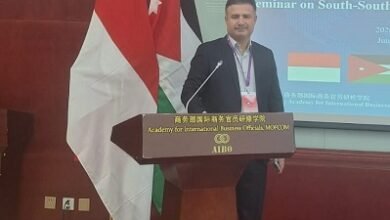
Beyond the Skyscrapers: Reflections on the Chinese Experience
Mohammed Eid Ali Naimat Through the generous invitation of the Academy for International Business Officials…
Read More » -

Jordanian-Japanese Strategic Partnership
Prof. Hassan Al-Da’jahProfessor of Strategic Studies at Al-Hussein Bin Talal University During His Majesty King…
Read More » -
Poland… A Nation That Did Not Surrender Despite Its Disappearance from the World Map
Hasan Abdullah Al-DajahProfessor of Strategic Studies at Al-Hussein Bin Talal University The State Disappears, but…
Read More » -
Jordan in the Eye of the Storm: Strengthening National Unity
Dr. Hasan Abdullah Al-DajahProfessor of Strategic Studies at Al-Hussein Bin Talal University At a highly…
Read More » -
The China-Arab Center for Reform and Development Studies
The Arab-Chinese Civilizational Partnership BridgeProf. Hasan Abdullah Al-DajahProfessor of Strategic Studies at Al-Hussein Bin Talal University The China-Arab Center…
Read More »