Pakistan and Peacemaking: A Regional Power Asserts Its Presence in International Politics
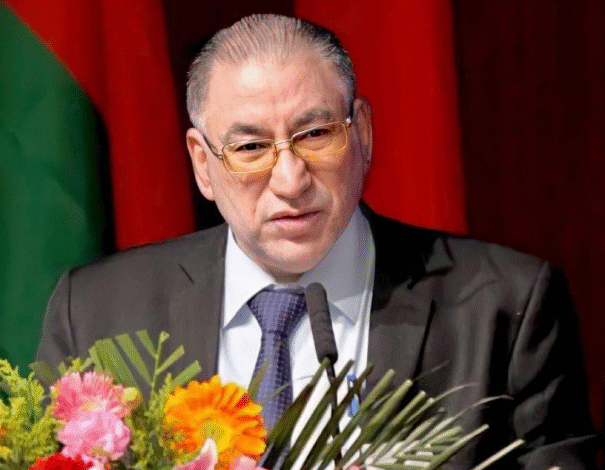
Prof. Hasan Al-Dajah
Professor of Strategic Studies at Al-Hussein Bin Talal University
In light of the escalating confrontation between the United States and Iran, and the risks it poses to the security of the Middle East and the stability of the global economy, Pakistan has emerged as one of the most important powers capable of opening channels of communication between the two sides and pushing for de-escalation. This role was not merely a fleeting diplomatic move, but rather represented a qualitative shift in Islamabad’s standing, which transcended its regional boundaries to become an influential player in addressing one of the most complex international crises.
From the outset of the escalation, the Pakistani civilian and military leadership realized that the continuation of the confrontation would not achieve a decisive victory for either side, and that the expansion of military operations would threaten the security of the Gulf and South Asia, and affect global navigation, energy, and trade. Therefore, it pursued a quiet and balanced diplomacy based on communication with Washington and Tehran, encouraging them to exercise restraint and bring the disputes back to the negotiating table.
Pakistan derives its ability to play this role from its exceptional geographical and strategic location; Pakistan is a neighbor of Iran, an Islamic nuclear power, and maintains important relations with the United States, China, and the Gulf states. It shares a long border with Iran and common security and economic interests, while simultaneously possessing influential channels with American political and military institutions. This balance has granted it a high degree of acceptance from both sides, enabling it to act without being directly aligned with either camp.
Islamabad has already become a key player in de-escalation efforts. Along with Qatar, it contributed to the mediation that led to the signing of a US-Iranian memorandum of understanding in June 2016, which provided a window of opportunity for negotiations toward a permanent settlement. Despite the talks faltering and the renewed confrontation, the mere fact that the mediation succeeded in producing a written framework demonstrated Pakistan’s ability to move both sides from the battlefield to the negotiating table, even in the most complex phases. Reuters. Pakistan continued its efforts after the collapse of the truce, emphasizing that renewed conflict serves no one’s interests and that a diplomatic solution remains the most realistic path to safeguarding regional security. This continuity reveals that its role is not based on temporary media investment, but rather on a strategic vision that considers regional stability an integral part of its national security and international responsibility. The Pakistani Foreign Ministry has clearly expressed Islamabad’s readiness to continue its efforts to de-escalate tensions and bring the parties back to the negotiating table. (Al Jazeera English)
The involvement of the highest levels of the state, including the political, military, and diplomatic leadership, indicates that mediation has become a comprehensive state policy. High-ranking Pakistani figures have participated in direct contacts and reciprocal visits, and the Pakistani Army Chief of Staff arrived in Tehran in May 2016 to support mediation efforts, coinciding with coordinated diplomatic moves with other regional actors. (Reuters)
This role reflects Pakistan’s possession of several influential instruments of power. It is one of the most populous Muslim-majority countries, possesses a powerful military and nuclear capabilities, and occupies a strategic location controlling the crossroads between South Asia, Central Asia, the Middle East, and the Arabian Sea. Furthermore, Pakistan’s economic corridors and ports are crucial components of regional connectivity projects and international trade, particularly within the framework of its strategic partnership with China.
However, Pakistan’s power is not based solely on military capabilities, but also on its ability to translate these capabilities into diplomatic influence. An influential state is not simply one that possesses power, but one that can use it to build trust, bridge divides, and prevent crises from escalating. From this perspective, Pakistan presents a model of a state that combines military deterrence with political flexibility and proactive diplomacy.
Islamabad’s cooperation with Qatar, China, and other regional states has enhanced the effectiveness of its mediation efforts, without compromising its independence. Beijing has supported Pakistani efforts, while Islamabad has maintained its own relationships with Tehran and Washington. This demonstrates that Pakistan is not seeking to compete with other mediators, but rather to lead a collaborative diplomacy that unites regional and international efforts around the goal of preventing all-out war.
This mediation also carries an important message regarding the ongoing transformation of the international system. Addressing major crises is no longer the exclusive domain of traditional Western powers; Asian and Islamic states, foremost among them Pakistan, are now capable of participating in the management of international security. Analyses have suggested that Pakistan’s potential hosting of the talks could elevate its global standing to a level not seen since its role in facilitating the historic US opening to China in the 1970s. Reuters reports that Islamabad’s success in maintaining the trust of the opposing parties is itself a significant political achievement. An effective mediator does not impose ready-made solutions, but rather provides guarantees, channels of communication, and safe spaces for negotiation, preventing miscalculations from escalating into a wider war. Therefore, the value of Pakistan’s role is measured not only by the swift achievement of a final agreement, but also by its ability to keep the door to diplomacy open.
Pakistan has become more than just a regional power in the traditional sense; it is a nation that has forcefully asserted itself on the international political stage, demonstrating its capacity to contribute to peacemaking and manage major balances. If it continues on this balanced path, it is poised to become an international diplomatic hub bridging East and West, giving the Muslim world a more prominent and influential voice in shaping the future of global security.